Firefly Clinic Pro Light Therapy for Lyme Disease & PTLDS
Blue Light • Red Light • Near-Infrared Light | Patient Education
TO BOOK AN APPOINTMENT, PLEASE CALL US AT (724) 225-2225
Firefly Clinic Pro Light Therapy for Lyme Disease & PTLDS
Blue Light • Red Light • Near-Infrared Light | Patient Education
TO BOOK AN APPOINTMENT, PLEASE CALL US AT (724) 225-2225
Lyme / PTLDS Symptom
How Firefly PBM Helps
1. Chronic joint pain & Lyme arthritis
2. Debilitating fatigue (mitochondrial exhaustion)
3. Brain fog & cognitive impairment
4. Peripheral neuropathy & nerve pain
5. Muscle aches & myalgia
6. Immune dysregulation
7. Sleep disruption
8. Depression & mood changes
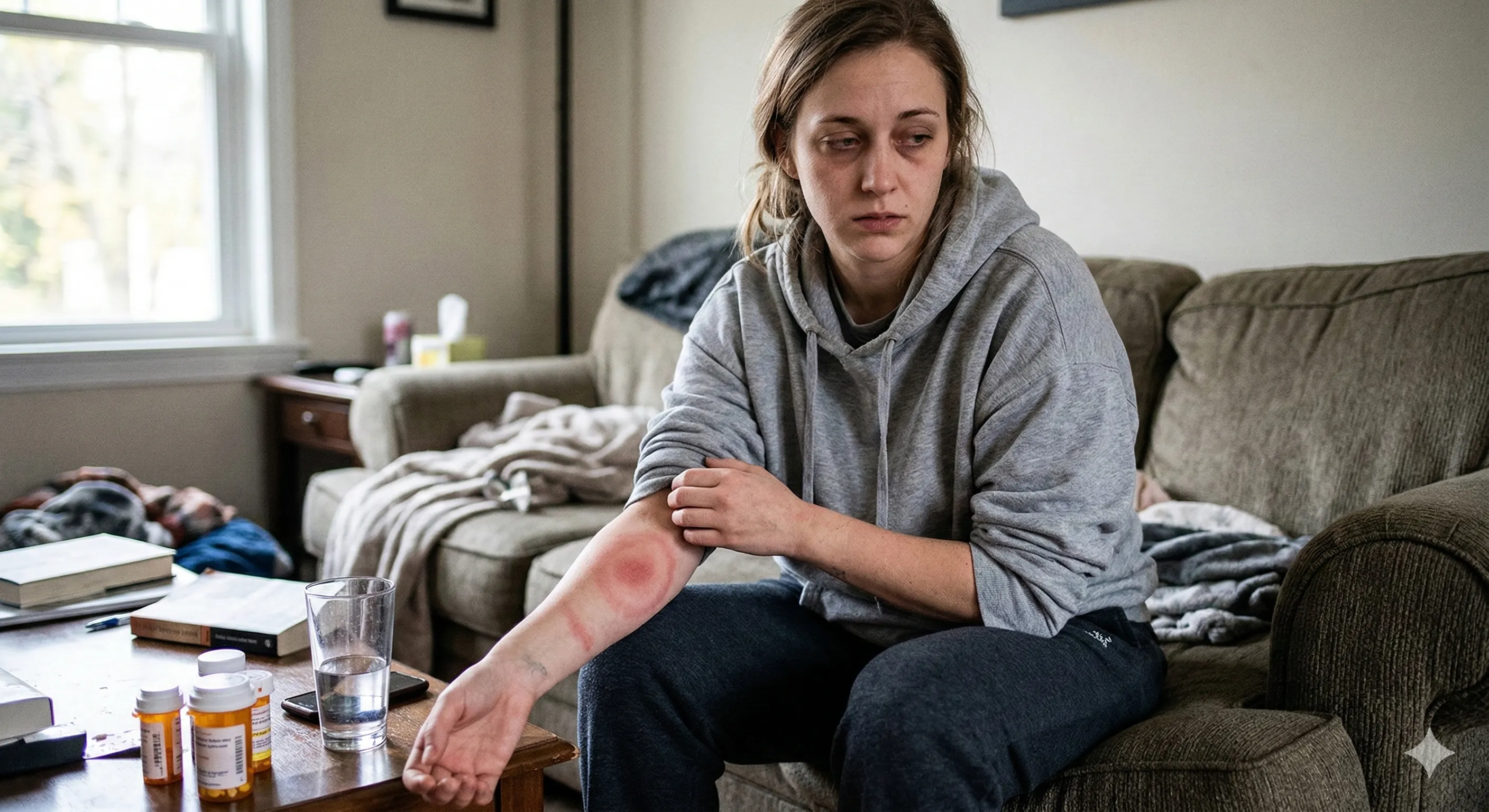
9. Skin rash & surface inflammation
10. Bell's palsy / facial nerve paralysis
11. Co-infections (Bartonella, Babesia)
12. Gut dysbiosis & digestive issues
1. Red + NIR light reduces joint inflammation and supports cartilage repair
2. All wavelengths restore ATP (cellular energy) in depleted mitochondria
3. Transcranial NIR reduces neuroinflammation and improves cerebral blood flow
4. NIR stimulates nerve regeneration and modulates pain signaling
5. Red + NIR reduce muscle inflammation and accelerate tissue recovery
6. PBM modulates cytokine balance, shifting the immune system toward healing
7. Systemic PBM reduces inflammatory burden th at disrupts sleep architecture
8. NIR influences serotonin/dopamine pathways; reduces neuroinflammation
9. Blue + Red light reduce local skin inflammation and accelerate healing
10. NIR promotes peripheral nerve regeneration (clinical case series documented)
11. Firefly + F-scan add-on: targeted frequency protocols for pathogen elimination
12. Firefly Clinic Pro add-on package: direct treatment for gut pathogens
Blue Light | 12 LEDs | Surface & Antimicrobial
1. Lymphatic activation: Blue light stimulates lymph flow — critical for Lyme patients, as the lymphatic system is a primary channel for clearing Borrelia toxins, dead bacteria, and inflammatory debris from tissues.
2. Antimicrobial immune support: Activates surface immune defenses and has documented activity against skin-based bacterial infections — supporting wound healing at the original tick bite site and skin manifestations of Lyme.
3. Reduces surface inflammation: Calms localized inflammatory skin responses (erythema migrans rash resolution, post-bite site inflammation) and supports surface tissue healing.
Red Light | 5 LEDs | Joints, Tissue & Circulation
1. Lyme arthritis: Red light penetrates to superficial joint tissue, reducing the synovial inflammation that causes Lyme arthritis. Research at wavelengths of 670 nm has shown decreased IFN-γ production — a key driver of Lyme joint inflammation — in Borrelia-infected tissue models.
2. Muscle and connective tissue repair: Stimulates fibroblast activity and collagen synthesis to repair the connective tissue damage that Borrelia causes in tendons, ligaments, and joint capsules.
3. Improved blood quality: Absorbed directly by hemoglobin in red blood cells, improving oxygen delivery to tissues suffering from the poor circulation common in chronic Lyme patients.
4. Cellular metabolism restoration: Directly boosts the speed of cellular repair cycles — critical when Lyme-damaged cells are in a metabolically depleted state.
Near-Infrared Light | 8 LEDs | Deep Tissue, Nerves & Brain
1. Neuroborreliosis & brain fog: Transcranial NIR application reduces neuroinflammation, improves cerebral blood flow, and has been shown to improve cognitive function and reduce brain fog in patients with neurological Lyme disease.
2. Peripheral neuropathy: NIR at 700–1100 nm is the only wavelength range that reaches peripheral nerves deep in limbs — actively stimulating nerve fiber regeneration and reducing the shooting, burning pain of Lyme neuropathy.
3. Deep joint penetration: Reaches hip, knee, and spinal joints up to 8 inches deep — providing anti-inflammatory effects in large joints affected by Lyme arthritis that red light alone cannot access.
4. Stem cell activation: NIR stimulates endogenous stem cells to repair cartilage, bone, and connective tissue damaged by chronic Lyme inflammation.
5. Mitochondrial recovery: The most powerful wavelength for restoring mitochondrial function — directly targeting the energy production collapse that underlies Lyme fatigue at its deepest level.
6. Bell's palsy / facial nerve: Clinical case series (Lyme-related peripheral facial paralysis) documented complete recovery using NIR photobiomodulation in patients who had failed all standard treatments.
Recovery with Lyme disease and PTLDS is rarely linear — improvement comes in waves as each body system recovers.
Based on clinical experience with PBM in Lyme patients, the following general timeline is observed:
Sessions 1 - 5: Early Response
Many patients notice an improvement in energy levels and sleep quality first. Pain levels may fluctuate as the inflammatory response is modulated. A temporary herx reaction is possible in early sessions
Sessions 6 - 12: Inflammation Reduction
Joint pain and muscle aches typically begin to decrease measurably. Brain fog may start to lift as neuroinflammation is reduced. Mood and sleep continue to improve as systemic inflammatory burden decreases
Sessions 13 - 25: Neurological & Deep Tissue Recovery
Nerve regeneration, cognitive improvement, and deep joint healing build cumulatively. Patients often report meaningful improvements in cognitive clarity, stamina, and daily function. Neuropathy symptoms begin to reduce.
Long-term Maintenance: Sustained Wellness
Ongoing periodic treatments (1–2 per month) help maintain the gains achieved, support ongoing immune regulation, and provide a proactive defense against symptom relapse — especially important given Lyme's tendency toward chronic cycling symptoms.
Photobiomodulation with the Firefly Clinic Pro is a complementary therapy designed to support your body's healing process and relieve symptoms of Lyme disease and PTLDS. It is not a cure for active Borrelia burgdorferi infection, and it does not replace antibiotic therapy prescribed by your physician for acute or active Lyme disease.
PBM works most effectively when used as part of a comprehensive, integrative treatment plan that may include antibiotic therapy (when indicated), nutritional support, detoxification protocols, and other evidence-based interventions. Consult your Lyme-Literate Medical Doctor (LLMD) before beginning PBM therapy, and inform all providers of all treatments you are receiving.
The following peer-reviewed publications support the use of photobiomodulation in Lyme disease, PTLDS, and the specific symptom domains described in this handout. Full text available at pubmed.ncbi.nlm.nih.gov.
Lyme Disease — Photobiomodulation Direct Evidence
1. Chen F, Nardelli DT, Eells JT. Effects of 670 nm and 830 nm Light on the Immune Response to Borrelia burgdorferi. University of Wisconsin-Milwaukee Thesis, 2015. [670 nm light significantly decreased IFN-γ production and increased borreliacidal antibody titers in murine Lyme arthritis model.]
2. Alrajoub W, et al. Efficacy of 1064 nm Photobiomodulation in Peripheral Facial Paralysis Including Lyme Disease-Origin Cases. PMC10573490. [Complete recovery of Lyme-related facial nerve paralysis following PBM after failure of standard care.]
3. Global Lyme Alliance. Red Light Therapy and Lyme Disease: Evidence Review. globallymealliance.org/blog/red-light-therapy-and-lyme-disease. 2023. [Affirms 630–900 nm wavelengths reduce inflammatory symptoms of Lyme arthritis; endorses as complementary therapy.]
4. Project Lyme. Red Light Therapy for Lyme Disease. projectlyme.org. 2023. [Documents growing clinical evidence for PBM in neuroborreliosis, brain fog, fatigue, and PTLDS symptom management.]
Mechanisms — Inflammation, Mitochondria & Immune Modulation
5. Hamblin MR. Mechanisms and Mitochondrial Redox Signaling in Photobiomodulation. Photochem Photobiol. 2018;94(2):199-212. PMID: 29164625.
6. Hamblin MR. Mechanisms and Applications of the Anti-Inflammatory Effects of Photobiomodulation. AIMS Biophys. 2017;4(3):337-361. PMID: 28748217.
7. de Freitas LF, Hamblin MR. Proposed Mechanisms of Photobiomodulation or Low-Level Light Therapy. IEEE J Sel Top Quantum Electron. 2016;22(3):7000417. PMID: 28070154.
Neurological Applications — Brain Fog, Neuropathy & Neuroinflammation
8. Salehpour F, et al. Brain Photobiomodulation Therapy: A Narrative Review. Mol Neurobiol. 2018;55(8):6601-6636. PMID: 29327206.
9. Liebert A, et al. Near-Infrared Stimulation in Psychiatric Disorders: A Systematic Review of Efficacy and Biological Mechanisms. Brain Sci. 2025;15(3):262. PMID: 40149783.
10. Hamblin MR. Photobiomodulation for Alzheimer's Disease: Has the Light Dawned? Photonics. 2019;6(3):77. [Transcranial NIR mechanisms directly applicable to Lyme-related neurodegeneration.]
Joint Pain, Arthritis & Musculoskeletal Recovery
11. Tripodi N, et al. The Effect of Photobiomodulation on Pain and Function in Tendinopathy. BMC Sports Sci Med Rehabil. 2021;13(1):91. PMID: 34362434.
12. Alayat MS, et al. Long-Term Effect of High-Intensity Laser Therapy in Chronic Low Back Pain. Lasers Med Sci. 2014;29(3):1065-73. PMID: 24178907.
13. Kang J, Song Y. Effects of Photobiomodulation on Multiple Health Outcomes: An Umbrella Review. Syst Rev. 2025;14(1):175. PMID: 40082913.
Blue Light — Antimicrobial, Lymphatic & Immune Support
14. Dai T, et al. Blue Light for Infectious Diseases: Propionibacterium acnes, Helicobacter pylori, and Beyond? Drug Resist Updat. 2012;15(4):223-236. PMID: 22846406.
15. Amin RM, et al. Antimicrobial Blue Light Inactivation of Pseudomonas aeruginosa by Photo-Excitation of Endogenous Porphyrins. Lasers Surg Med. 2016;48(5):562-568. PMID: 26818884.
Lyme Biofilm & Borrelia Persistence
16. Thippani S, et al. Evidence for the Presence of Borrelia burgdorferi Biofilm in Infected Mouse Heart Tissues. Microorganisms. 2024;12(9):1766. PMID: 39338441. [Documents biofilm formation as key mechanism of antibiotic resistance and chronic disease.]
17. Fallon BA, et al. Lyme Borreliosis and Associations With Mental Disorders. JAMA Psychiatry. 2021. [Supports neuropsychiatric Lyme as documented clinical entity requiring multi-modal treatment.]
Firefly Clinic Pro — Device Research (Bales Photonics)
18. Bales Photonics. Firefly Clinic Pro Add-On Package for Co-infections, Lyme Disease, and Gut Pathogens. balesphotonics.com/firefly-features. [Documents specific Clinic Pro add-on protocols for Lyme co-infections and gut pathogens using F-scan and Function Generator.]
19. Glass GE. Photobiomodulation: The Clinical Applications of Low-Level Light Therapy. Aesthet Surg J. 2021;41(6):723-738. PMID: 33471046.
20. Anatara Medicine. Photobiomodulation for Complex Chronic Illness Including Lyme, Bartonella, and Co-infections. anataramedicine.com/iv-therapy/low-level-laser-light-therapy. 2025. [Documents PBM as frontline complementary therapy for Lyme, Bartonella, Viruses and Mold/Biotoxin illness.]
Additional research: balesphotonics.com/research | pubmed.ncbi.nlm.nih.gov | globallymealliance.org
Questions about Firefly Lyme treatment? Ask your provider at your next visit.
Firefly Clinic Pro is manufactured by Bales Photonics, Inc. — balesphotonics.com
This is for educational purposes only and does not replace individualized medical advice from your Lyme-literate healthcare provider.